Insured & BondedBBB AccreditedIn the Trade Since 2016

Available 24/7 for Storms · 502-296-2607

Forestry Mulching
in Louisville, KY

Overgrown ground turned back into usable land in a single pass, with the brush left behind as ground cover instead of hauled off in a dumpster.

Get Your Free Estimate

Or call us at 502-296-2607

The Work

What Forestry Mulching Looks Like Here.

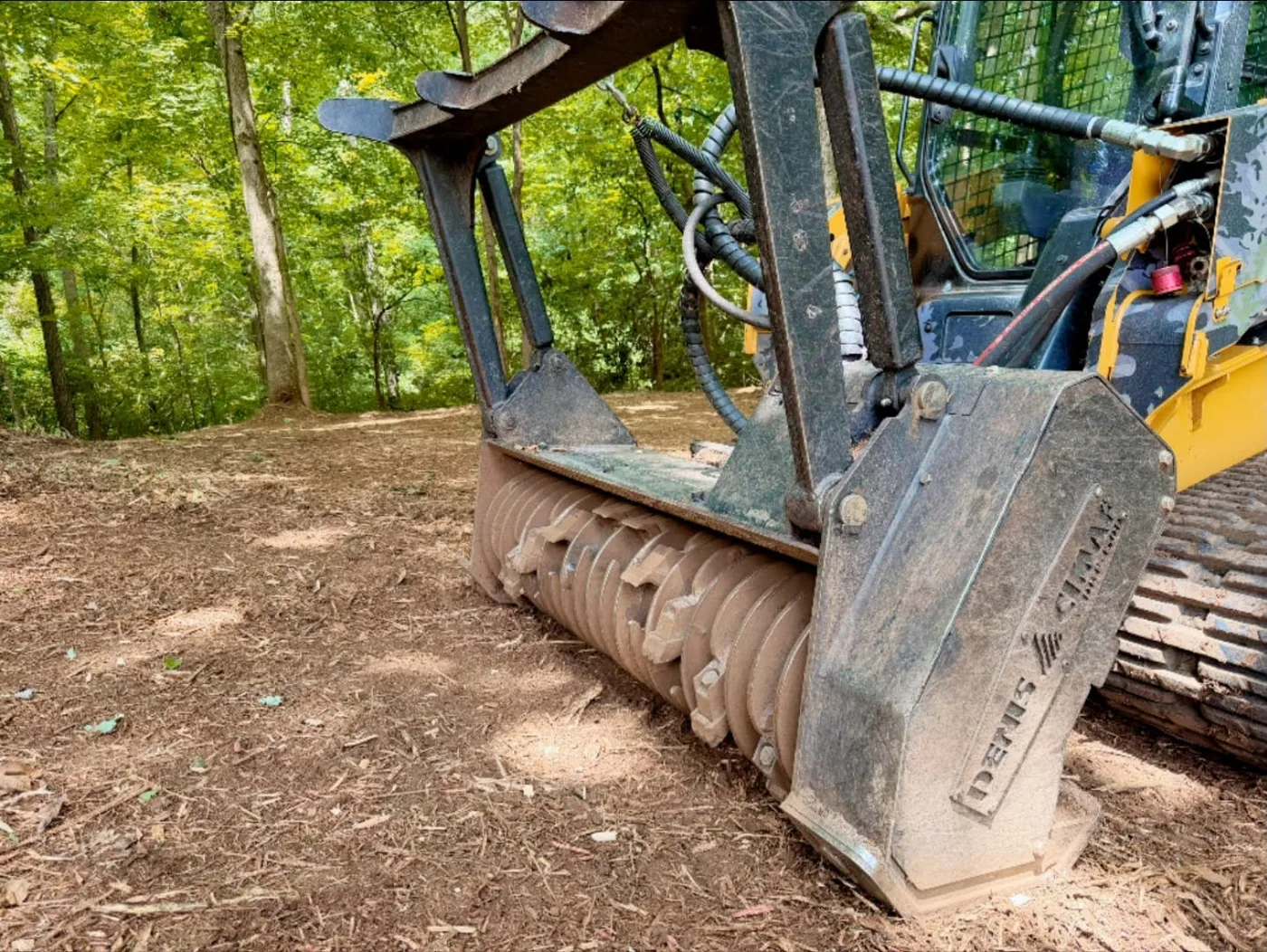
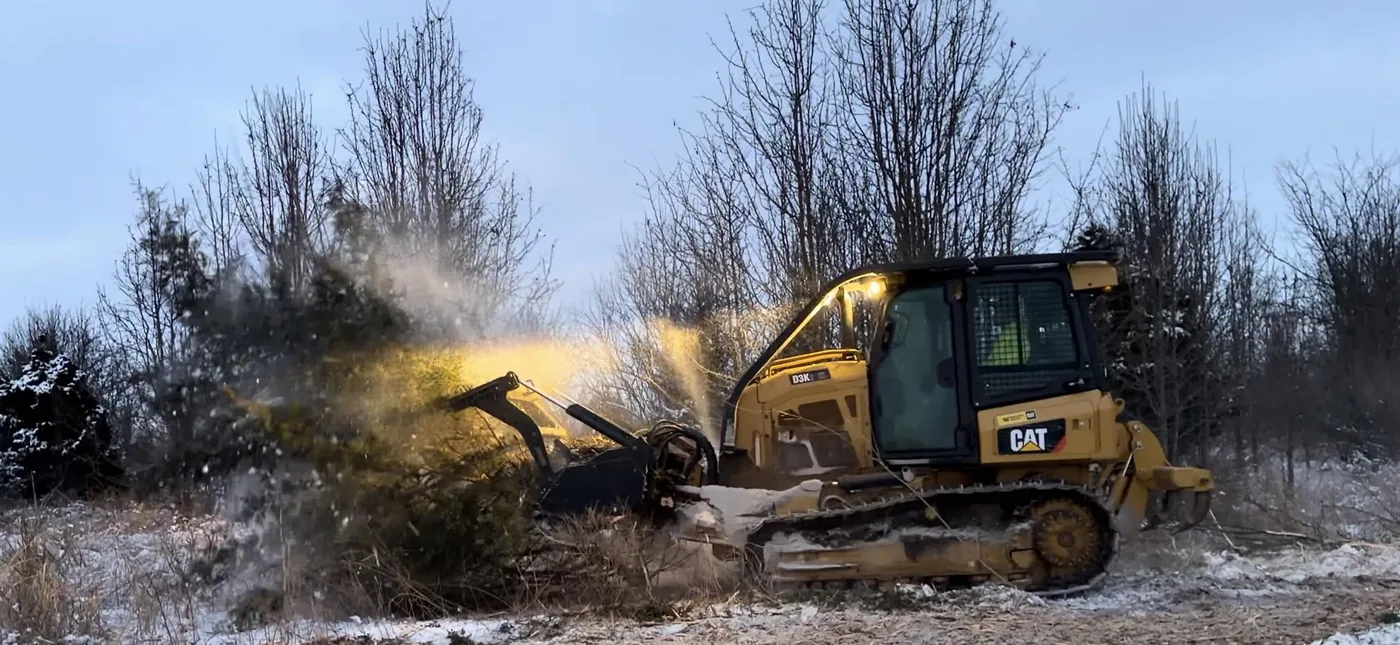
Mulching is the most ground you can reclaim for the money. A mulching head grinds standing brush and small trees where they stand and drops the material as a mulch layer, so there is no burn pile, no stump field, and no line of dump trucks running in and out of your property all week.

Expect about an acre a day per machine. That number moves with how thick the growth is and how steep the ground gets, and you will get a real estimate of it after we walk the property rather than a number over the phone.

The mulch layer is not just what is left over. It holds soil in place through the first hard rain, keeps the dust down, and breaks back into the ground over the next couple of seasons.

What That Actually Means

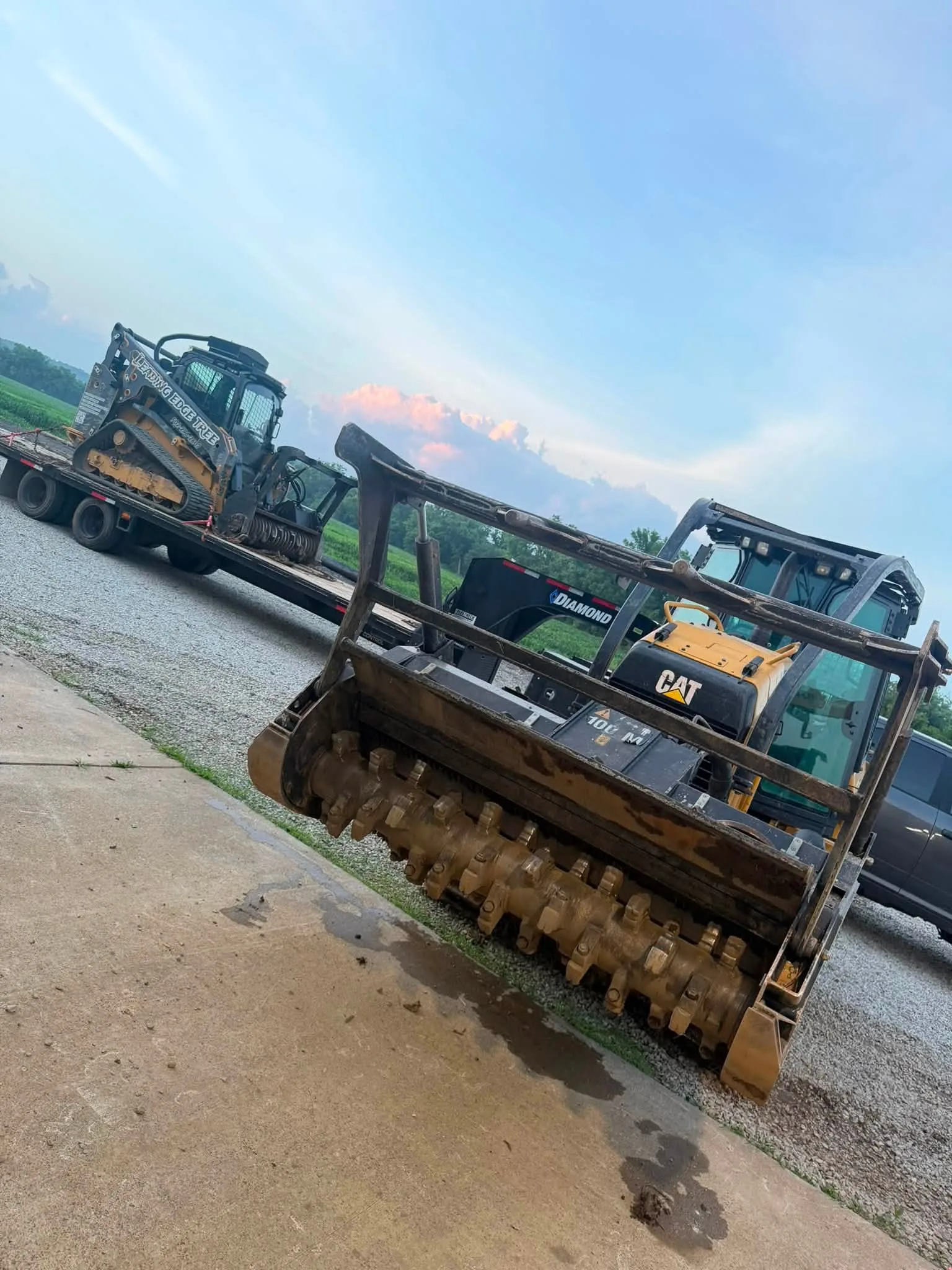
  • Cat 275 with a Denis Cimaf head

    The primary mulching package, with buckets, grapples and forks alongside it.

  • Cat D3K2 steel-tracked mulcher

    Goes where a skid steer will not, on grades and soft ground that stop wheeled machines.

  • Kubota M7040 with a bush hog

    For pasture and light growth that does not justify running a forestry mulcher.

  • Boundaries marked first

    Where we stop is agreed and marked before the first machine moves.

How a Job Runs

  1. Call, then text. Send over your name, the address, and a few lines about the job.
  2. We walk it with you. On-site visit, grade shot where it matters, boundaries agreed.
  3. Written estimate. Detailed, and left with you before we pull out of the driveway.
  4. The work, then a clean finish. Ready for the next phase, not for the next contractor.

Estimates are free on some jobs and not on others. Tell us what you have when you call and you will know before anyone heads your way.
Common Jobs

Forestry Mulching Comes in a Few Shapes.

Mulching covers a lot of different jobs. These are the ones we get called for most.

Pasture Reclamation

Pasture that has not been grazed or cut for a few seasons stops being pasture. Cedar, locust and blackberry move in from the fence lines and work toward the middle, and every year the usable acreage shrinks. Mulching takes it back in one pass without pulling the root plate out of the field, so the ground stays firm enough to run stock or equipment on straight afterward. The mulch layer breaks down into the soil rather than sitting in a burn pile in the corner of the field. For pasture that is only lightly grown in, the Kubota with a bush hog is often the cheaper machine and we will say so rather than putting a forestry mulcher on a job that does not need one.

Fence Line Clearing

Fence lines are where clearing work usually starts, because that is where the growth starts. A line that has been let go for a few years will have saplings growing through the wire, which means the fence cannot be repaired without clearing first. Mulching a fence line is fast and it leaves the posts and wire intact where they are still good. We walk the line with you first and mark anything that stays. Where the growth is past the 5 inch range or has grown around the wire, that section comes out with the excavator instead, and we will tell you which sections those are before we start rather than after.

Trail & Access Cutting

Cutting a trail into a property is often the first thing that has to happen before anything else can. Logging access, a path to a build site, a route to the back of a hunting property, a riding trail. Mulching cuts the trail and surfaces it in the same pass, so it is drivable when the machine leaves rather than needing a second operation to clean up. Width and route get walked and flagged with you before the machine starts, because a trail in the wrong place is expensive to undo. On grades and soft ground where a skid steer would struggle, the steel-tracked D3K2 does the cutting.

Understory & Sight Line Clearing

Sometimes the trees are not the problem, the layer underneath them is. Clearing the understory opens up a view, makes a wooded lot walkable, and takes the fuel load down without touching the canopy you actually want. This is selective work rather than a blanket pass: we agree what stays before the machine starts, and the mature trees are worked around rather than through. It is also the version of mulching most likely to be limited by tree size, since anything past about 5 inches in diameter comes out faster another way.

Our Work

Forestry Mulching, On the Ground.

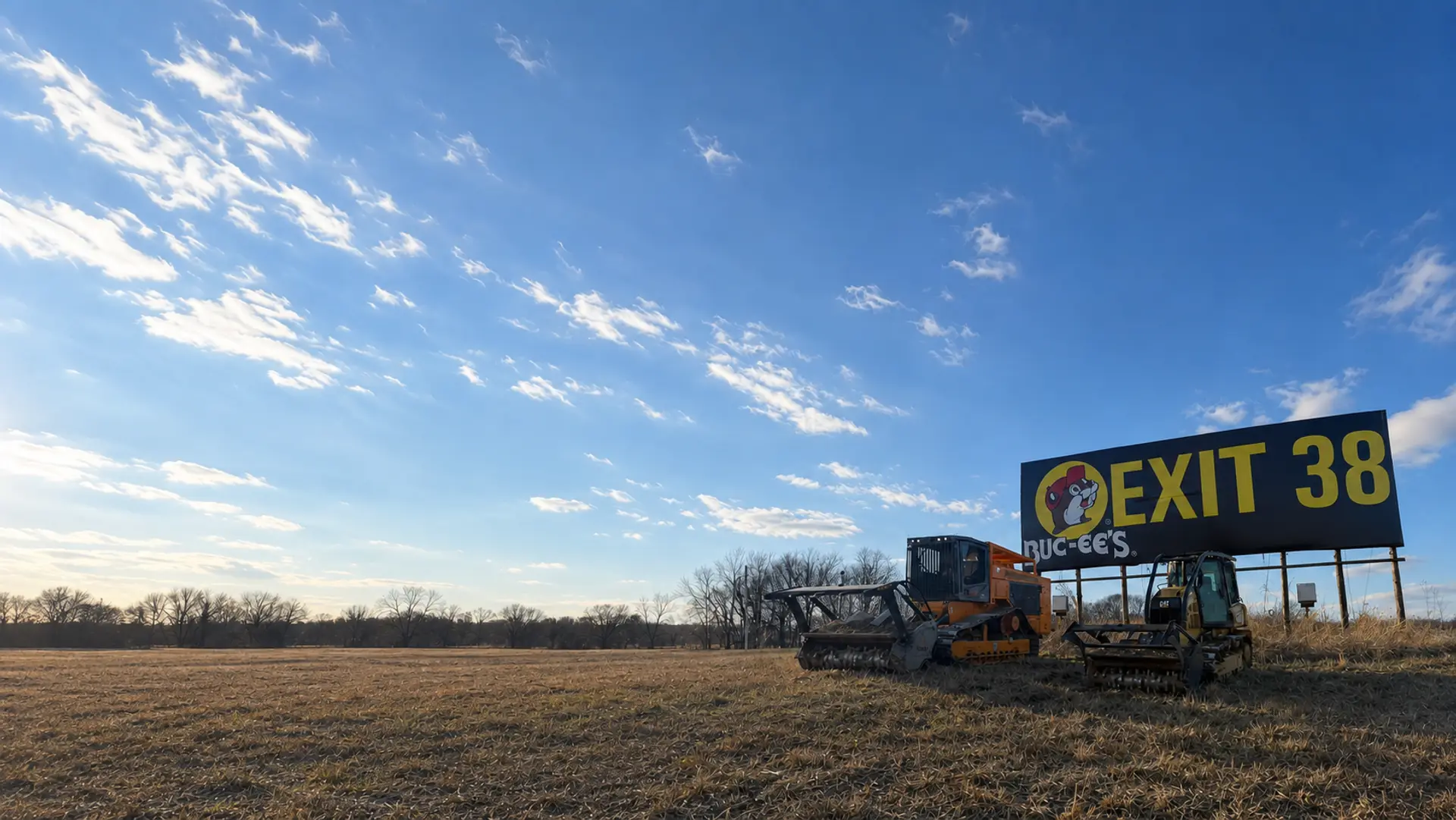
Leading Edge crew and equipment on a job site
What It Costs

What Moves the Number.

We price mulching per job after walking it, not off a rate card. These are the things that move the number, so you know what we are looking at when we walk your property.

  • How thick the growth is

    Light brush moves several times faster than a stand of cedar. Thickness matters more than acreage.

  • Stem size

    Under 5 inches in diameter is mulcher work. Past that the job shifts to the grapple saw or excavator, which changes the machine and the time.

  • Terrain and grade

    Steep or soft ground means the steel-tracked machine rather than the skid steer, and slower going either way.

  • Access

    How close we can get equipment to the work, and what we have to cross to get there.

Why Us

Why People Call Us for Forestry Mulching.

The right machine, not the only machine

Three mulching packages plus a bush hog, so light pasture does not get billed like heavy timber.

Boundaries marked before we start

Where we stop is agreed and flagged, not a conversation you have afterward.

Straight answer on the method

If clearing is the better call for what you are actually trying to do, we will say so.

Straight Answers

Forestry Mulching
Questions.

Can't find yours? Call and ask. You'll get a straight answer, not a sales pitch.

Call 502-296-2607
How much can you mulch in a day?

About an acre a day per machine is the honest planning number. It moves with how thick the growth is and how steep the ground gets, and you will get a real estimate for your property after we walk it.

What size trees can the mulcher take?

The sweet spot is 5 inches in diameter and under. The machines will handle more, but past 5 inches a grapple saw or an excavator is usually faster and cheaper, and we will tell you which is which on the walkthrough.

Do the stumps come out?

No. Mulching grinds what is above ground and leaves the root systems in place. If you need clean dirt for building, grading or a pond, you want full clearing instead.

What happens to all the material?

It stays on your ground as a mulch layer. There is no burn pile and no line of dump trucks. The layer holds soil through the first hard rain and breaks down over the next couple of seasons.

Can you mulch around trees I want to keep?

Yes. That is normal for understory and sight line work. We agree what stays before the machine starts and work around it rather than through it.

Available 24/7 for Storms

Tree on the House?
We're Rolling in Hours.

24/7 emergency response for the Louisville metro. The same crew that lived out of a camper for a month clearing Bowling Green after the tornado.

Call Now

Are you on the schedule yet?

Get Your Free Estimate

Or call us at 502-296-2607